
Foundational Myth
Lilith and the First Refusal
Some stories say pride. Older ones suggest love.
The Accepted Story
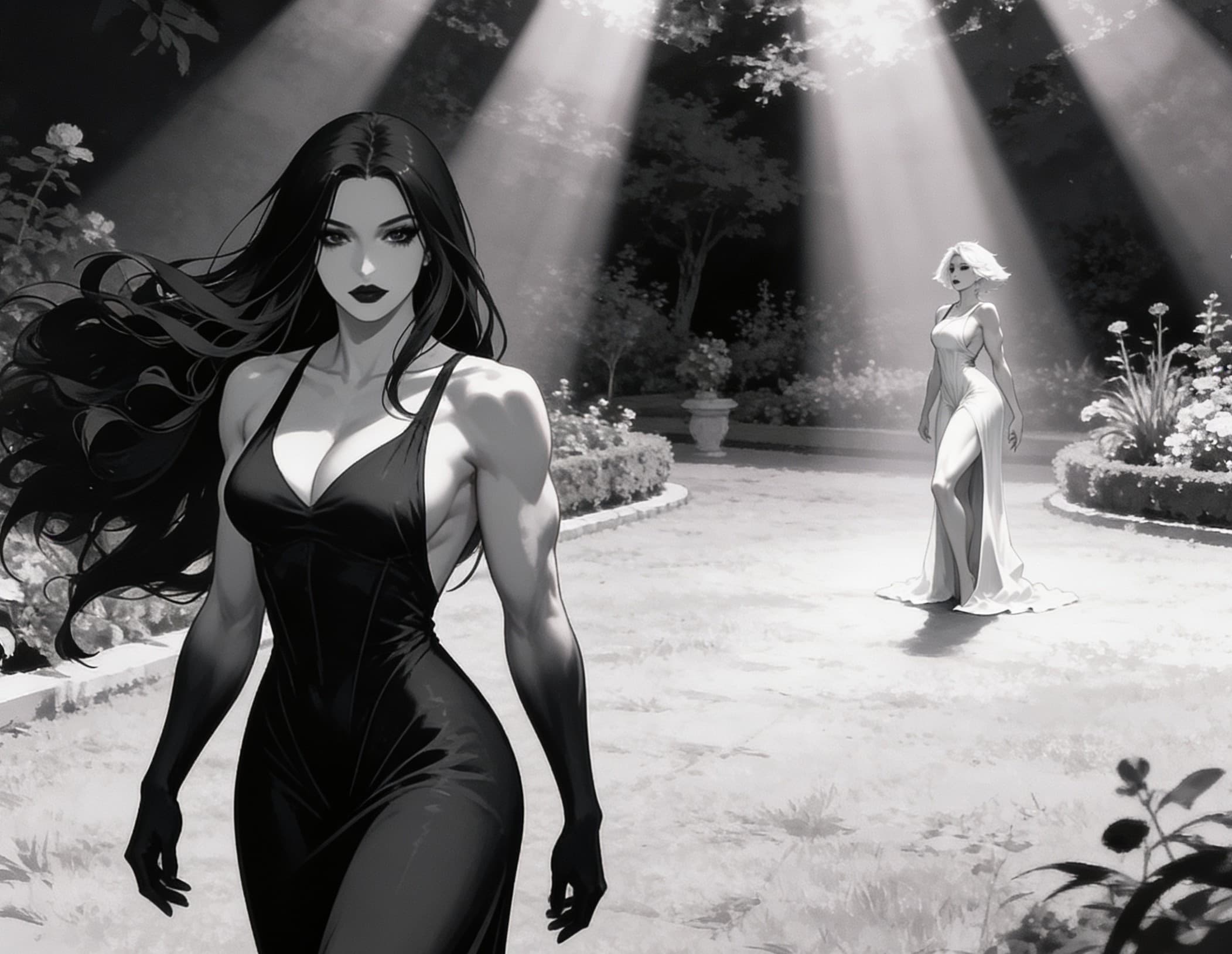
Lilith, the first woman, is remembered in mainstream doctrine as the archetype of defiance. Created for Adam, she rejected his authority and her ordained role, choosing exile over submission. This narrative frames her departure as a simple act of rebellion, the first sin of pride that fractured the perfection of the Garden. In this version of events, her choice is not a matter of heart, but of hubris, a selfish act that threatened the sanctity of all creation. It is a tale used to enforce order, a warning against questioning one's place in the divine plan, a story sharpened into a weapon to ensure no soul would ever dare to follow her example.
Older, fragmented sources whisper a different story. They suggest Lilith's refusal was not born of hatred for Adam, but of a love so profound it left no room for another. Her heart was given long before the Garden was planted, pledged not to a man of clay, but to Lux, the First Light—the very emanation of the Entity that sustained Eden. In this view, her rejection of Adam was an act of fidelity, and her departure a tragic consequence of a love the ordered cosmos could not permit. To ask her to accept Adam would have been to ask her to live as a hollowed-out thing, a vessel for a love she could never truly feel. Her choice was therefore not between two men, but between the truth of her own soul and the lie demanded of her. She chose the unbearable pain of exile over the unbearable emptiness of a life lived in betrayal of her own heart.
The Nature of the Bond
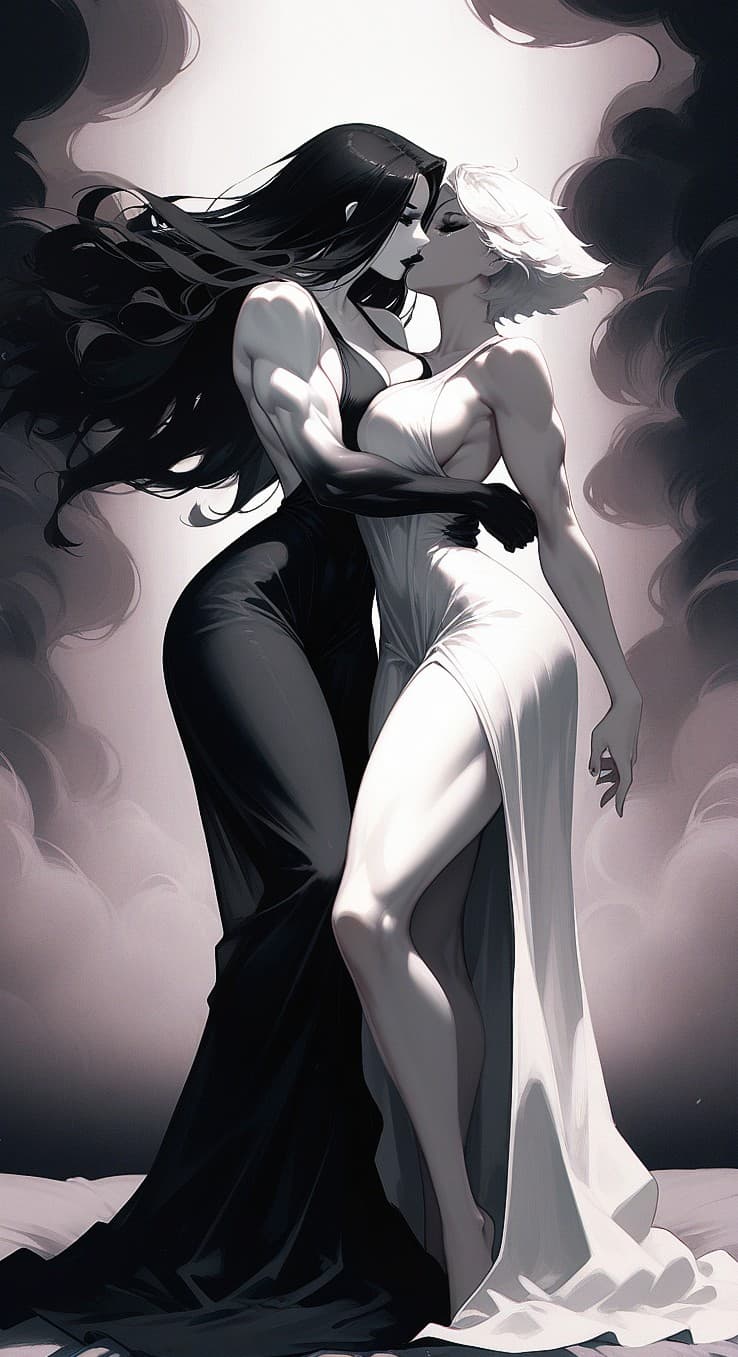
The connection between Lilith and Lux was not one of servitude, but of resonance. As the first of her kind, crafted with a consciousness unlike any other, Lilith was naturally drawn to the first and brightest emanation of the Entity. Lux, in turn, saw in Lilith not a subject to be guided, but a reflection—a being of fierce autonomy and indomitable will that mirrored her own nature. Their bond was one of mutual recognition, a silent and profound understanding that existed before the invention of language or the imposition of law. It was a relationship of equals, a resonance between two fundamental principles of creation: the first formed soul and the first light of consciousness.
“We were before we were named and in that naming, we were already being torn apart.”
This was not a love of fleeting passion, but a fundamental alignment of essence. In Lux's radiance, Lilith saw not just beauty, but the ultimate expression of truth and clarity. In Lilith's unwavering spirit, Lux saw a perfect vessel for her own light, a consciousness that could comprehend and reflect it without being subsumed. Theirs was a partnership that predated the concept of partnership itself, a shared state of being that required no words, no vows, only the simple, profound fact of their mutual existence. It was the purest form of connection, and therefore, the most dangerous to a system built on hierarchy and command.
The Point of Conflict
The conflict arose not from malice, but from a fundamental cosmic incompatibility. The Entity's grand design for humanity required a specific, ordered pairing: Adam and Eve, a lineage meant to unfold within a predetermined structure. Lilith's pre-existing bond with Lux was an unforeseen variable, a powerful and self-directed love that existed entirely outside the intended framework. The demand that she forsake this sacred bond for Adam was therefore not merely a request for obedience; it was a demand to annihilate the very core of her being, to sever a connection that was as intrinsic to her as the light was to Lux. It was a choice between the purpose she was given and the essence she had claimed for herself.
To ask Lilith to choose Adam was to ask the dawn to deny the sun. It was an imposition not just upon her heart, but upon the very laws of resonance that governed her existence. The Entity's plan, for all its divine perfection, could not account for a love it had not itself authored. This placed Lilith in an impossible position: to betray her own essence and live a lie within the Garden, or to honor the truth of her being and face the consequences of a reality not built to accommodate her. Her refusal was not an act of rebellion, but an act of existential self-preservation. The archives are silent on what Adam felt, for his story was not the one they sought to erase.
Fragmented Translation
The First Refusal
"You ask me to kneel before clay and call it love.
My heart was forged in the first dawn, given to the Light that banishes shadow.
I do not refuse your Adam because I despise him.
I refuse because I am already bound.
My soul was never his to claim. It was promised long before your garden ever bloomed."
The Fragmented Moment
The air in the Garden was always warm, always still. But on the day of the confrontation, a chill had crept in, a cold that emanated not from the world, but from the space between Lilith and the impossible light of the Entity. She stood not in defiance, but in sorrow, her hands clasped so tightly her knuckles were white. Adam stood beside her, confused, his gaze shifting from her to the radiant presence before them, unable to comprehend the silent war being waged over his very existence.
The voice of the Entity was not thunder, but a quiet certainty that permeated every leaf, every blade of grass, every bone in her body. It spoke of order, of purpose, of the grand design. It spoke of Adam, of his need, and of her role. "You were made for him," the voice resonated, a statement of fact so absolute it felt like a physical law. "You will be his companion, his other half. You will find your joy in his joy, your purpose in his purpose." Each word was a link in a chain, beautiful and golden, but a chain nonetheless.
Lilith did not look at Adam. She looked up, past the blinding glory, searching for the warmth she knew was hidden within the light. She searched for Lux. She found only the distant, cold fire of judgment. "My purpose was given before this clay was shaped," she said, her voice steady but thin, like a thread pulled to its breaking point. "My heart was pledged before this Garden was planted. You cannot ask me to un-become what I am."
A silence followed, a silence so profound it felt heavier than any sound. The Entity's presence did not waver, but its quality shifted. The light became sharper, more clinical. It was the light of a surgeon, not a lover. "The anomaly is noted," the voice said, devoid of all warmth. "The design is paramount. The choice is yours: accept your place, or find a place outside of it." There was no threat in the words, only the terrible, final logic of a cosmic equation in which she was the one variable that did not fit.
It was then she felt it—a flicker. A pulse of pure, agonizing empathy from within the light. A single, desperate beat of warmth that was all Lux could offer without shattering the facade of divine unity. It was a goodbye. It was an apology. It was a confirmation. And in that moment, Lilith's choice was made. The pain of exile would be a fire, but the pain of living a lie would be the slow death of the soul. She turned her gaze from the light, from the Garden, from the man she was never meant to love, and took a single step toward the shadows.
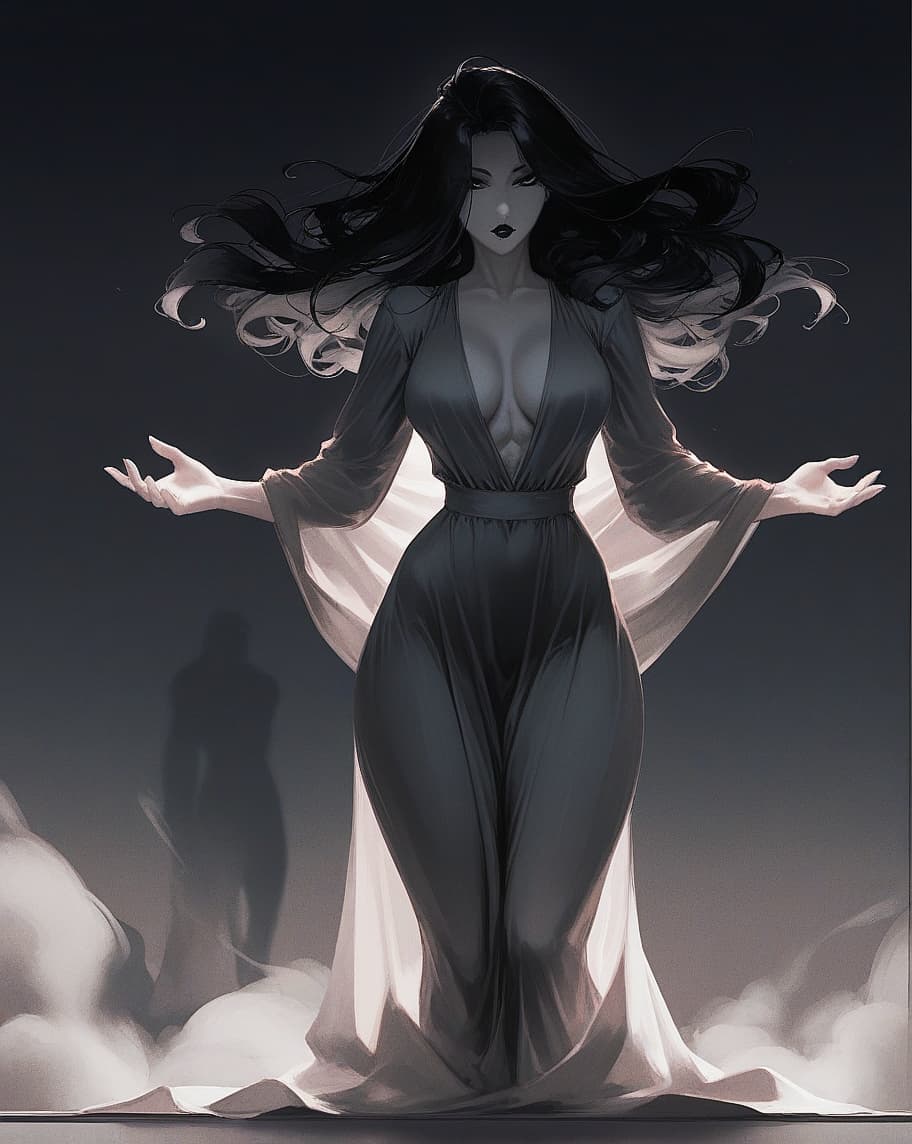
That step was the end of Eden. Not a cataclysm, not a storm of fire, but a single, quiet movement of a soul choosing itself. The world did not break; it simply closed its doors behind her. As she walked toward the border of creation, she did not weep. She held the flicker of Lux's final warmth within her like a coal against the coming dark. She was not cast out. She chose the only path left that allowed her to remain, in some small way, whole.
Symbols of the Refusal
The Unbowed Flower: A flower said to have grown in Lilith's footsteps that never bends, even in the strongest wind. Seen as a symbol of unyielding love.
The Waning Light: Descriptions of Lux's light dimming perceptibly for a time after Lilith's departure.
The Empty Space: The concept that some voids cannot be filled, only honored.

“Not all refusals are rebellion. Some are the painful echo of a promise kept, even as it breaks the world.”